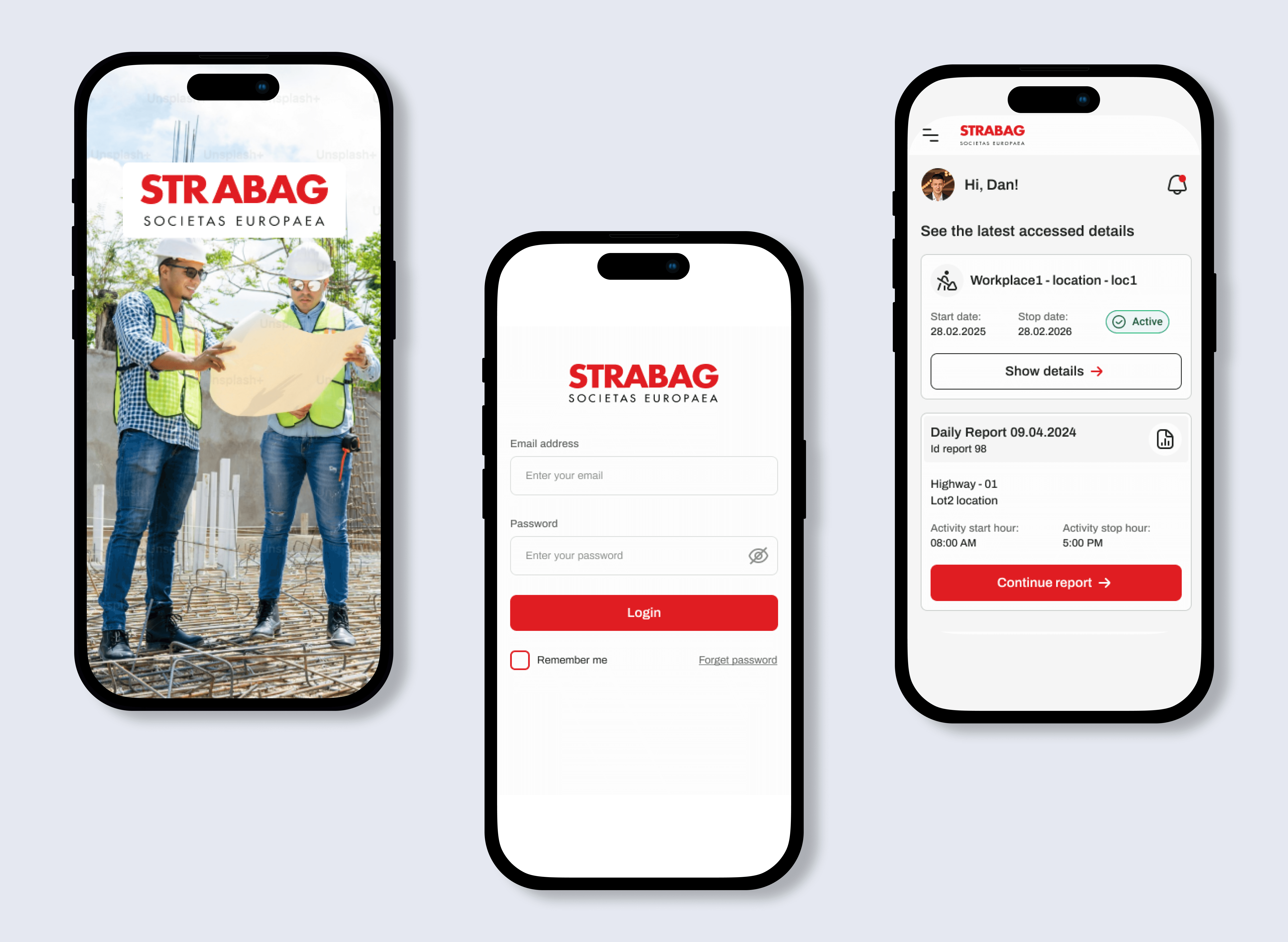
As the UI/UX and Product Designer, I led the end-to-end design of STRABAG’s internal field management mobile application — a digital solution aimed at streamlining daily reporting, cost allocation, and project tracking for construction site teams across Europe.
The app serves as a comprehensive tool for site engineers, foremen, and project managers, replacing paper-based processes with a structured, data-driven workflow.
Core Objectives
Digitize and simplify complex on-site reporting tasks
Provide real-time access to project progress and resource utilization
Ensure seamless coordination between on-site and office teams
Maintain compliance with corporate standards and operational workflows
Key Features
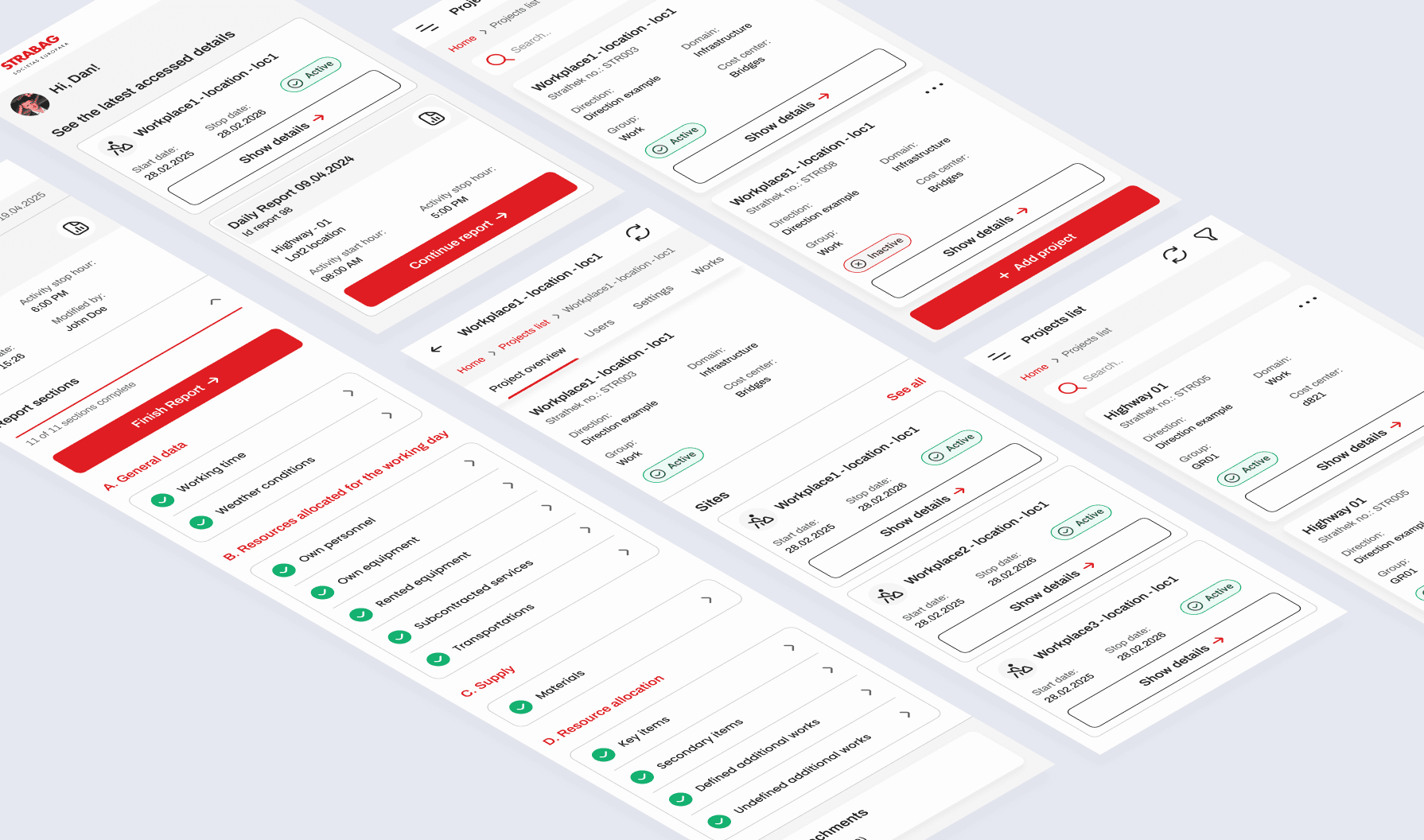
Daily Reports & Activity Logs: Enables users to record working hours, weather conditions, materials used, and executed quantities in a clear, step-by-step interface.
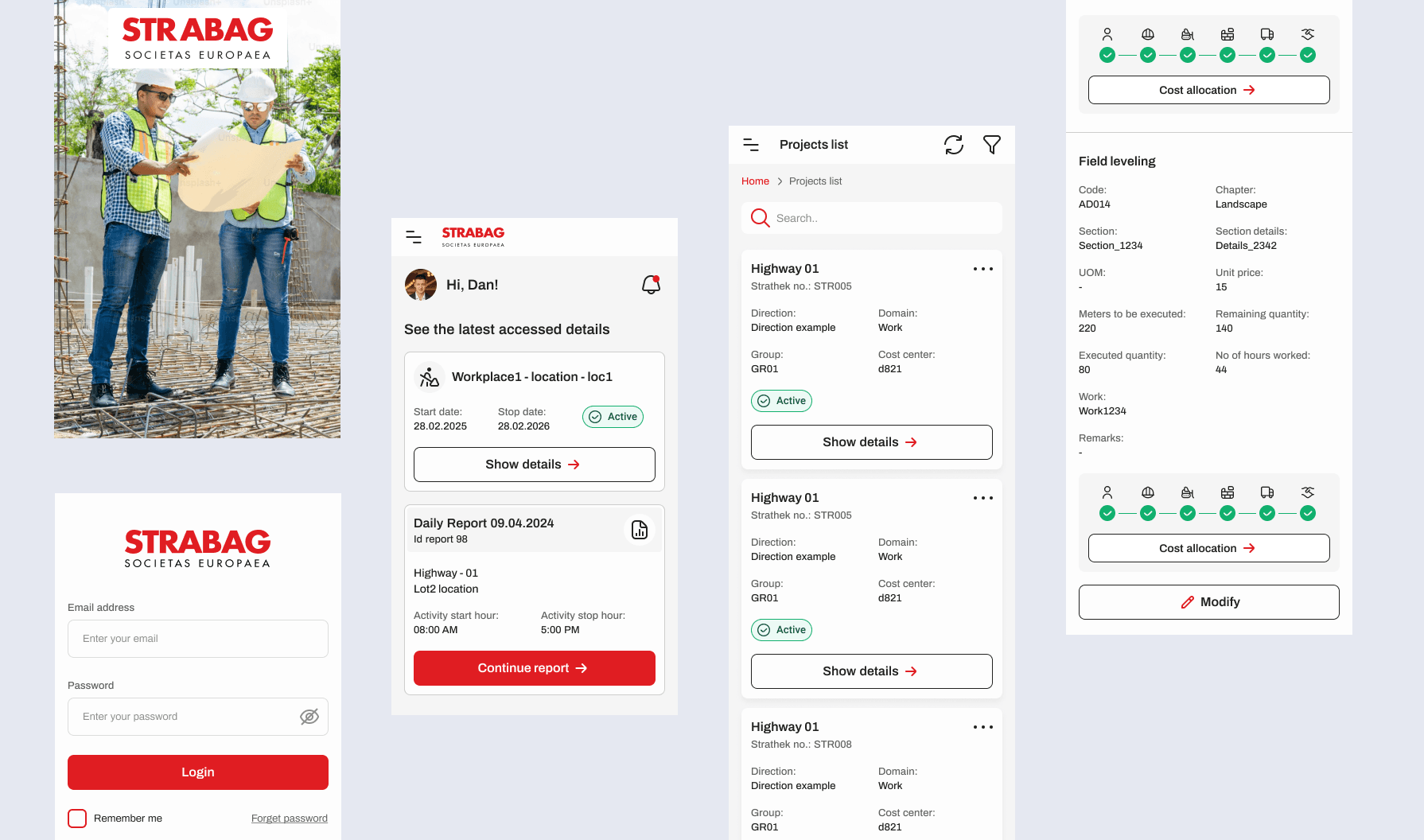
Project & Workplace Management: Interactive dashboards for browsing active projects, tracking site progress, and viewing detailed project metadata (direction, domain, cost center, etc.).
Resource Allocation: Dedicated modules for assigning personnel, equipment, and subcontracted services with live status indicators and validation flows.
Cost Control & Field Leveling: Integrated modules for monitoring unit prices, quantities, and progress against targets.
Smart Navigation & Accessibility: Intuitive card-based layout, adaptive design for different devices, and offline-friendly architecture for use on remote sites.
Design Process
Conducted user interviews and field observations with site engineers to understand their daily routines and constraints.
Created information architecture and user flows that mirror real-world reporting hierarchies (Project → Workplace → Report → Section).
Developed low-to-high fidelity prototypes in Figma and validated them through usability testing with internal STRABAG teams.
Delivered a consistent design system aligned with STRABAG’s brand guidelines, focusing on clarity, hierarchy, and ease of input for industrial users.
Impact
Reduced average daily report completion time by ~40%.
Improved data accuracy and transparency between field and back-office operations.
Provided a scalable design framework adaptable for web and tablet versions.